

How Real Farming Shaped a Smarter Solution
Netwrap: A Smarter Solution Grown from the Field
Spend a day in the field during baling season, and you’ll see how much every detail matters. Crop conditions change by the hour. Weather windows are tight. Machines run long days. And every bale needs to hold its shape, protect its value, and move efficiently from field to storage.
For years, farmers and contractors worked with what was available, often compromising between bale density, coverage, baling time and reliability. These challenges were not always visible from the outside, but they were felt every single day in the field. Before the introduction of Tama Netwrap, baling was also significantly slower. Each bale forced operators to stop and wait while the baler finished its cycle. Tama Netwrap dramatically improved this process, allowing farmers and contractors to keep moving and work far more efficiently in the field.
This is where the story of Tama’s Netwrap really begins.
Not in a lab, but in the field itself.
Listening Before Designing
The development of advanced Netwrap solutions did not start with a product idea. It started with conversations.
Farmers spoke about loose edges that exposed crop to moisture. Contractors pointed out the impact of inconsistent wrapping on bale density and handling. Long storage periods raised concerns about UV exposure and material durability.
These were not isolated issues. They were recurring patterns across regions, crops, and working conditions.
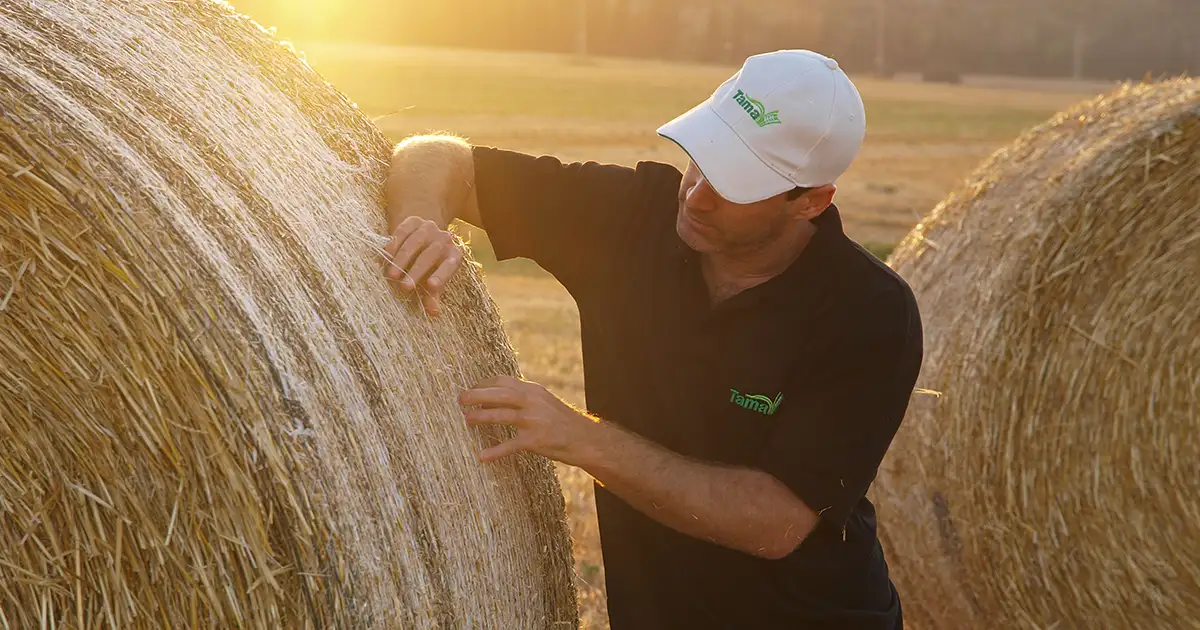
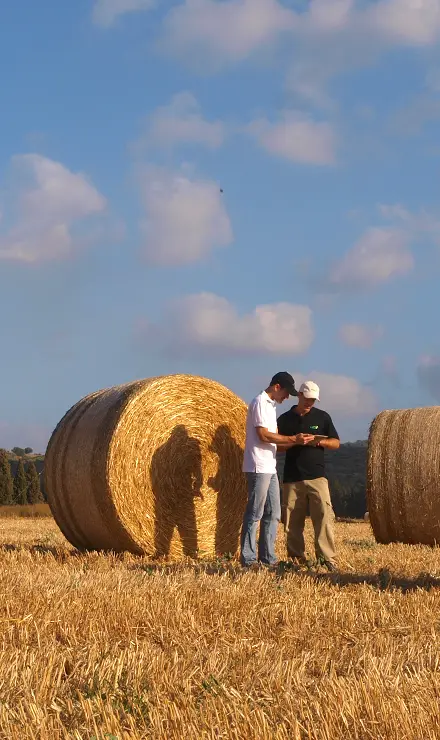
Understanding these challenges meant more than collecting feedback. It required being present in the field, observing real baling operations, and testing solutions under real pressure.
Turning Experience into a Practical Advantage
Turning field insights into working solutions is not a one-step process. It is an ongoing cycle of development, testing, and refinement.
One example is the evolution toward Edge to Edge and later CoverEdge™ technology. What may seem like a small adjustment in coverage was, in reality, a direct response to a very practical need: protecting the edges of the bale.
By improving coverage across the full width of the bale, it became possible to:
- Maintain better bale density and shape
- Improve handling and transport stability
- Enhance silage protection by reducing exposure points
These improvements did not come from theory alone. They were shaped through repeated field testing, across different crops, climates, and working styles.
Designed for Real Conditions, Not Ideal Ones
Heat, sun exposure, dense or expansive crops, and long storage periods are part of everyday reality. Netwrap was developed with these conditions in mind, improving durability and reliability where it counts most.
Better resistance to UV and heat, combined with reliable performance during wrapping, helps maintain bale integrity from the moment it leaves the baler to its final use.
Better bale shape improves storage and transport. Reliable materials help minimize waste and protect valuable crops.
Supporting Efficiency in Daily Work
For farmers, time and reliability are critical. A solution that works smoothly and consistently allows them to focus on managing their business, not fixing problems.
Netwrap is designed to perform predictably in the background – supporting steady workflows, reducing interruptions, and helping farmers move confidently through demanding harvest windows. With less feet per bale, more bales per roll, and less downtime on each roll, operators can work faster, more smoothly, and complete jobs more efficiently throughout the day.
An Ongoing Process
The development of Netwrap has never been a finished story.
Every season brings new conditions, new challenges, and new opportunities to improve. Staying close to the field means continuing to listen, test, and refine. From reducing the time it takes to form each bale to improving consistency and reliability, every step forward has focused on helping farmers work faster and more efficiently when it matters most.
Because in baling, the difference is not in what looks good on paper, but in what performs, bale after bale.