

Silage Bale Wrapping: When the Final Step Defines the Entire Season
Making good baled silage isn’t quick, easy, or cheap. You’ve got to get the crop right, cut it at the right time, and bale it in tight weather windows. Every job has to be done properly, or it’ll cost you later.
One step that often doesn’t get the thought it should is wrapping. But wrapping isn’t the last job, it’s what keeps all the hard work you’ve already put in from being wasted.
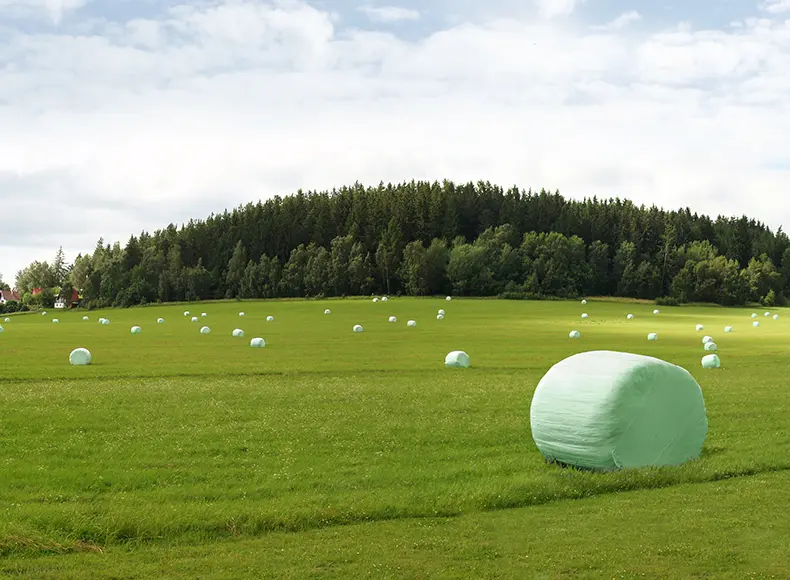
Why Film Application Accuracy Matters
Good silage comes down to keeping the air out. It doesn’t take much – one thin spot or weak bit of wrap – and oxygen gets in. That’s when bales start heating, going mouldy, and losing feed value. A bale can look fine from the outside and still be letting air in where you can’t see it.
It’s not just how you wrap the bale on the day; it’s the full wrapping setup you choose in the first place. The film needs to suit the crop you’re baling, how long you’re storing it, the weather it’ll sit in, and how often it’s handled. If the film’s only just good enough, you usually don’t see the problem until months later, when the bale’s opened and the damage is already done.
What goes on before the wrap matters too. A good Netwrap or netwrap alternative that holds the bale tight and covers right to the edges makes a big difference. It keeps the bale shape right and stops soft shoulders where air can get trapped. When the edges are covered properly, the wrap seals better, the air stays out, and the silage keeps.
Bottom line, good silage protection comes from using the right stretch film and backing it up with a strong Netwrap that keeps the bale firm, even, and easy to seal.
Protecting Value Until the Moment of Use
Silage is produced months before it is consumed. The film applied today must perform throughout storage, through temperature changes, mechanical handling, and environmental exposure. When wrapping is treated as a strategic stage rather than a final chore, the outcome is greater feed stability, reduced waste, and improved overall efficiency.
Stretch film is not just a covering. It is the protective barrier between valuable forage and avoidable loss.
From Best Practice to System Thinking
At Tama, bale wrapping is viewed as part of a broader silage protection system. The goal is not only to supply high-performance stretch film, but to ensure that film, equipment, and application practices work together to deliver consistent, reliable results.
This requires deep understanding of crop behaviour, fermentation dynamics, machine configuration, and environmental factors. It also requires ongoing technical guidance and practical field experience to ensure that theoretical performance translates into real-world protection.